Alkaline Protease for Leather Bating and Hide Soaking
Bulk alkaline protease for tanneries and leather-chemical suppliers: cleaner soaking, controlled bating and less sulfide in liming. Request a quote with your hide type, quantity and destination.
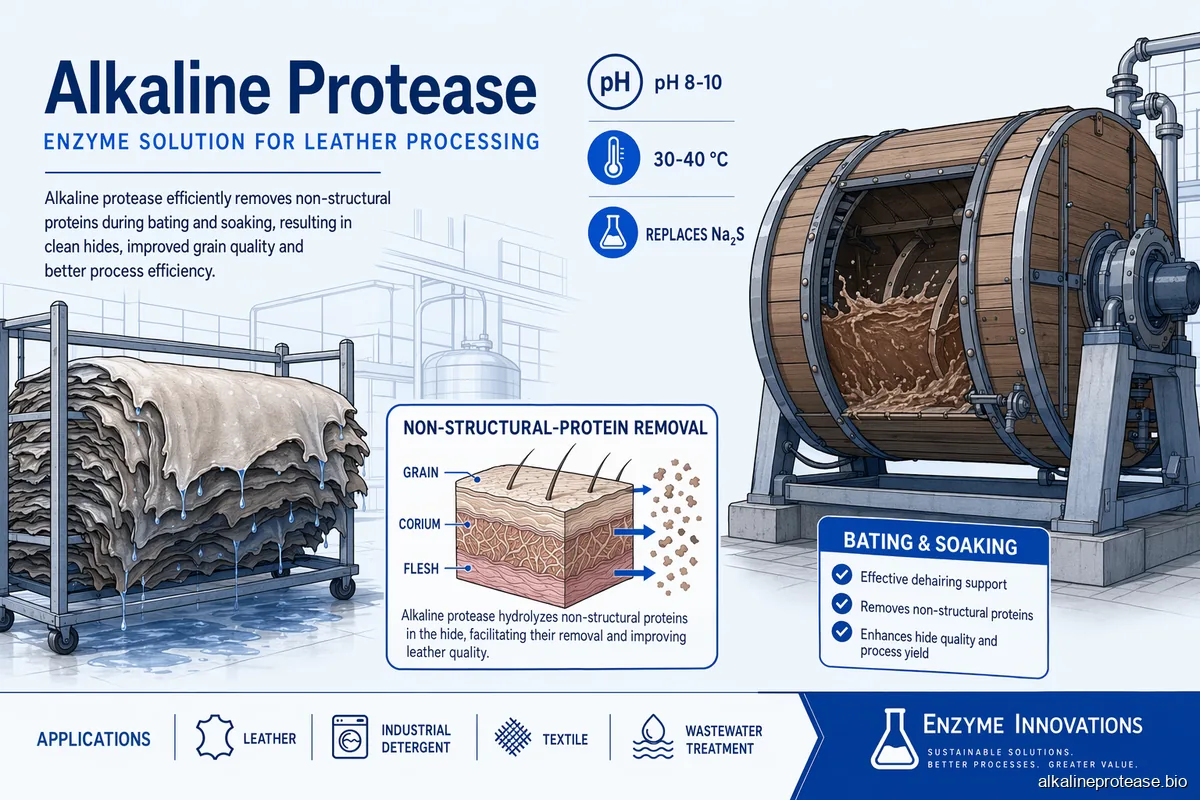
Tanneries buy alkaline protease for three business reasons: cleaner, faster soaking; even, controllable bating; and less sodium sulfide in the liming step, which lowers the effluent load. We supply it in bulk to tanneries and to the leather-chemical companies that formulate and resell bating and soaking agents. To get a quote, email hello@mail.alkalineprotease.bio with your hide type, the process step, the quantity and the destination country.
In the supply market, the same concentrated liquid alkaline protease is usually sold for textile, laundry and leather work at once, and industrial grades list textile, leather and washing together as their use range. That is useful for price, but it means a general-purpose grade arrives without a leather recipe. Ask any supplier, us included, for guidance on your hide type and process step, and confirm the dose on a few hides before a full drum.
Where it fits in the beamhouse: in the soak, protease helps remove surface protein, blood and dirt so hides rehydrate more evenly. In bating, after liming and deliming, it removes non-structural proteins so the grain is clean and the leather softer. In liming, it is used alongside a reduced sulfide dose to help loosen hair. The intensity of each step depends on hide species, thickness and the leather you make, from firm shoe upper to soft garment and glove leather.
Over-bating can loosen the grain, so control matters more than strength. Choose a grade whose activity is stated on the COA with its test method, keep pH, temperature and time fixed in your trial, and change one variable at a time.
Hide soaking
Protease in the soak float helps strip surface protein, blood and dirt so salted or dried hides rehydrate more evenly. Cleaner hides going into liming mean fewer problems later. Use a biocide as usual for long soaks.
Bating for shoe upper and furniture leather
Moderate bating removes non-structural proteins from the grain layer for clean grain and even tanning. Keep the bating light enough to protect grain tightness; confirm with your usual float, thumb and grain checks.
Bating for garment and glove leather
Soft leathers need more intensive bating for stretch and drape. That means longer or stronger enzyme action, so pH and temperature control are critical to avoid damaging the collagen.
Lower-sulfide liming
Alkaline protease used with a reduced sulfide dose helps loosen hair, cutting the sulfide that ends up in liming effluent and lowering treatment cost. Trial it on a few hides before changing a production recipe.
Leather-chemical suppliers
Companies that sell bating and soaking agents to tanneries buy the enzyme in bulk to blend under their own brand. We quote drum quantities per order and provide COA and TDS for your technical file.
| Parameter | Value |
| Activity range | 100,000 – 200,000 U/g |
| Optimal pH | 8.0 – 10.0 |
| Optimal temperature | 30°C – 45°C |
| Form | White to light tan powder |
| Shelf life | 12 months (sealed, cool, dry place) |
| Packaging | 25 kg drums / custom packaging |
Frequently Asked Questions
What is alkaline protease bating in leather processing?
Bating follows liming and deliming. It removes non-structural proteins from the hide, which otherwise leave the leather stiff, the grain uneven and tanning patchy. Alkaline protease does this work in the alkaline bating float, giving hides controlled softness, a clean grain and even tanning uptake.
Can alkaline protease replace pancreatic enzymes in leather bating?
In many tanneries, yes. Bacterial alkaline protease is made by controlled fermentation, so activity is standardised from batch to batch and supply does not depend on the meat industry. It also stays active in the alkaline part of the bating range. Run a side-by-side trial against your current bate on the same hide lot.
How do we stop over-bating?
Bating intensity follows dose, temperature, pH and time. Keep three fixed and change one. Use your usual checks (float test, thumb print, grain appearance). For a new hide type, start low and step up.
Is a general detergent-grade protease suitable for leather?
Many industrial grades are sold for textile, laundry and leather together. They can work, but they come without a leather recipe. Ask for the activity test method on the COA and run your own hide trial before buying in bulk.
What documentation is provided for tannery procurement?
We provide COA with protease activity (casein method, U/g), TDS covering pH and temperature profiles relevant to bating and soaking conditions, MSDS, and ISO 9001 certification. For tannery compliance, we can provide information on the absence of heavy metals and biocide contaminants. Halal and Kosher certification is also available for tanneries supplying leather to markets with religious compliance requirements.
Request a Bulk Quote for Tannery Protease
Tell us your hide type, process step (soaking, liming or bating), quantity and destination country. We will recommend a grade, send a 100 g free sample with COA and TDS, and quote within 24 hours.
Request a Quote